Clery Data Dashboard
Introduction to UNM's Clery Dashboard
The Jeanne Clery Disclosure of Campus Security Policy and Campus Crime Statistics Act is a federal law enacted in 1990 that requires all colleges and universities that receive federal financial aid to publicly disclose campus crime stats for the preceding three years.
Colleges must also publish an Annual Security Report by October 1st each year, maintain a public crime log within two business days of reported incidents, issue timely warning, emergency notifications, and track / report specific crime categories.
For more info please visit the Annual Security & Fire Safety Reports :: Campus Safety | The University of New Mexico.
Clery Geography
UNM Clery Act Geography determines which crimes count towards reportable statistics. Clery geography is broken into four main categories.
1. On-Campus: Any building or property owned or controlled by the institution, within the same reasonably contiguous geographic area, and used to support the institution's educational purposes.
ex. Zimmerman Library, the SUB, academic buildings, athletic fields, etc.
2. On-Campus Student Housing: Specifically, dormitories or other residential facilities for students located on campus. This is broken out separately in reporting because certain crimes (like domestic violence, dating violence) are tracked with special attention to residential areas.
ex. Residence halls like Alvarado or Coronado Hall. Redondo Village apartments and Lobo Rainforest, etc.
3. Public Property: Public property (streets, sidewalks, parking lots, parks) that is within or immediately adjacent to the campus — basically the property that borders campus that students cross regularly, even though the institution doesn't own or control it.
ex. The public sidewalk running along Central Ave next to main campus.
4. Non-Campus: Any building/property owned or controlled by the institution (or a recognized student organization) that is used for educational purposes but not on the main, contiguous campus.
ex. Off-site research facilities or UNM affiliated Greek life housing.
- For additional information on Clery geography visit UNM's Clery Website.
Data Sources
- Our data is sourced from various sources including UNM's Annual Security Reports and UNMPD.
- Only crimes that fall within specific Clery Geography count towards reportable statistics.
- One report can contain multiple reportable crime statistics and some crimes are counted in multiple categories.
Beginning January 1, 2025, UNM began collecting statistics for hazing, per the recently passed Stop Campus Hazing Act. During calendar year 2025, UNM received one report of hazing within its Clery Act geography. Information about this incident is publicly accessible in the Dean of Students Office's Campus Hazing Transparency Report. For UNM's Anti-Hazing Policy and resources to prevent hazing, visit studentconduct.unm.edu/hazing.
2025 Insights
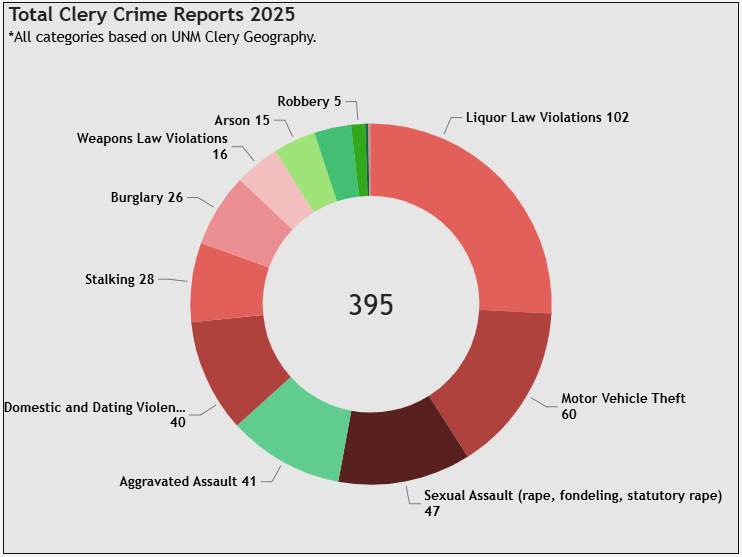
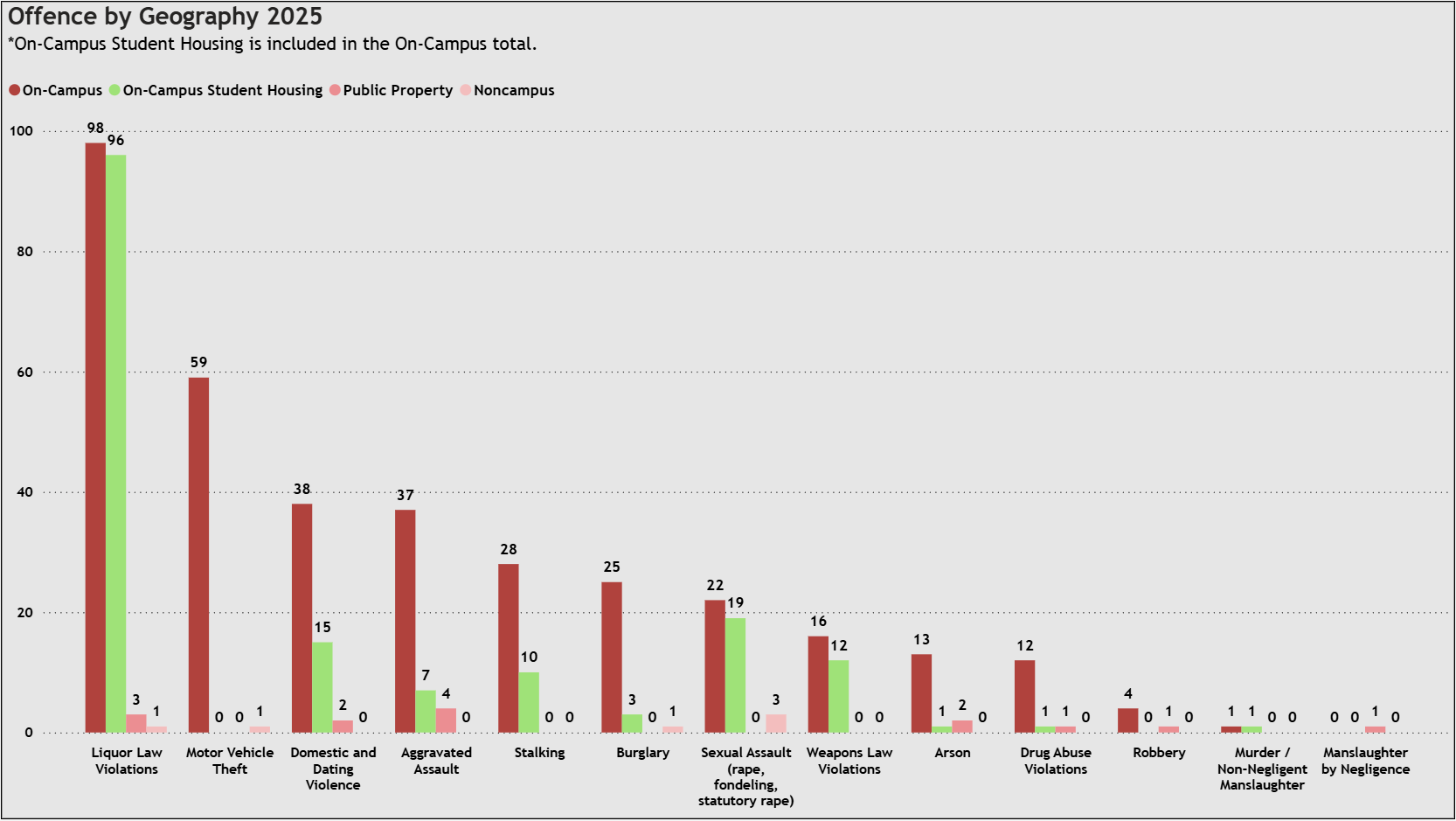
- In 2025, 51% of Clery crimes occurred on-campus, with 44% occurring in student housing, and the final 5% happening between non-campus and public property.
- Motor vehicle theft continues to be the second largest contributor to Clery crimes. This category includes e-bikes, e-scooters, cars, and anything with a motor.
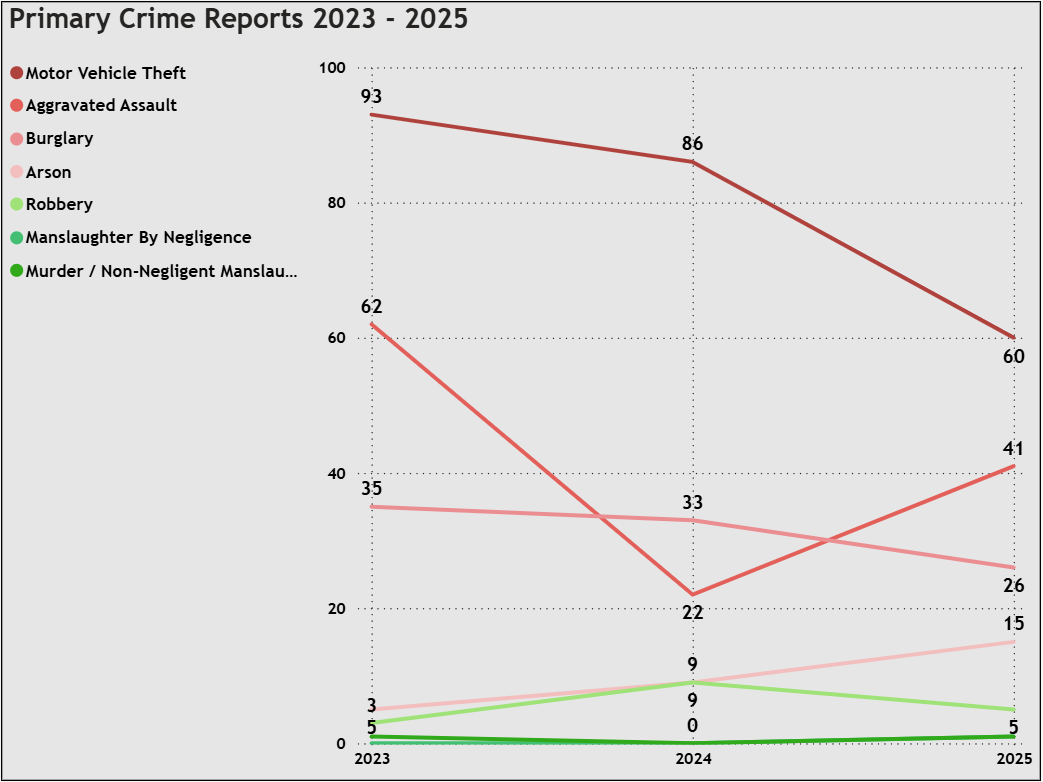
- Aggravated assault crimes that fall under Clery nearly doubled from 2024 to 2025.
- Motor vehicle theft rates have declined by 30% from 2024.
- Arson incidents have been steadily increasing each year since 2022.
Theft and Safety Prevention Tips
- Add the UNM Police Department number to your phone. 505-277-2241
- Don't leave doors propped open, and lock doors when leaving your room or office.
- Take notes of where blue emergency phones are located on campus
- Keep aware of your surroundings. Talking or texting on your cell phone could distract you, making you an easier target
- Use a high quality u-lock along with a chain or cable.
- Lock your bike in well-lit, higher traffic areas.
- Lock your bike frame and both wheels to a designated bike rack.
- Don't leave spare parts on your bike that could potentially be stolen, such as bike computers or lights.
- Wear reflective clothing when riding at night.
- If you see suspicious activity report it immediately.
VAWA Statistics
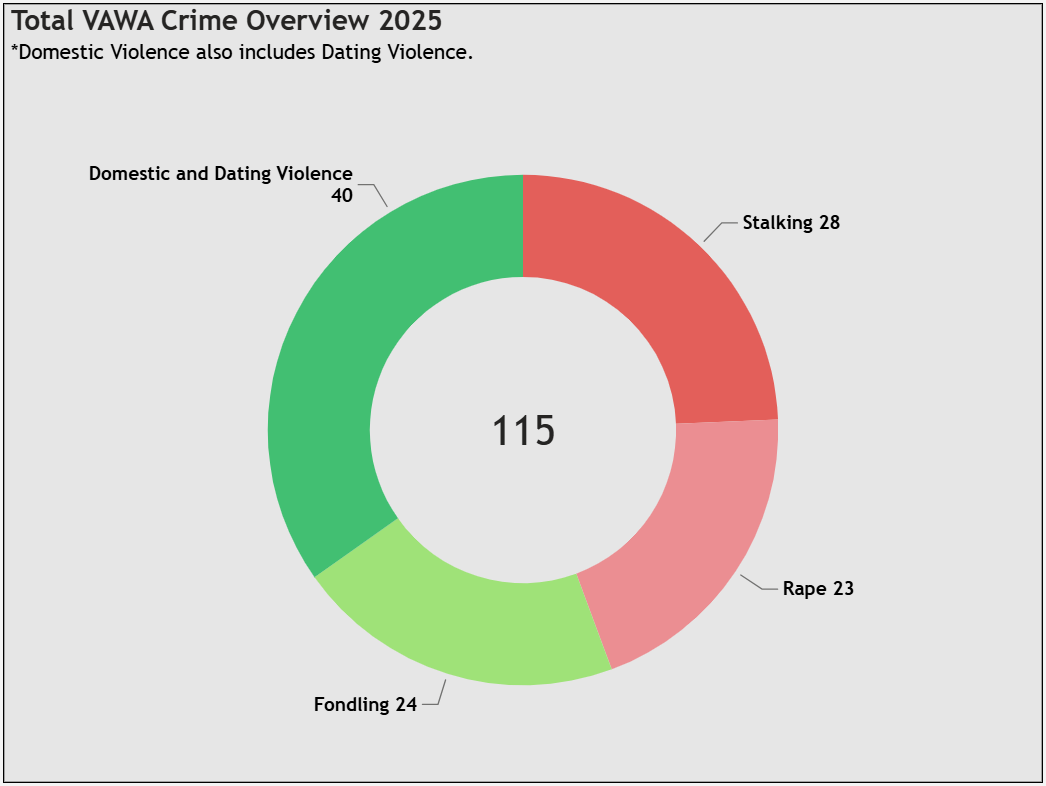
- Crimes covered under the Violence Against Women Act (VAWA) include sexual assault (encompassing rape, fondling, incest, and statutory rape), dating violence, domestic violence, and stalking.
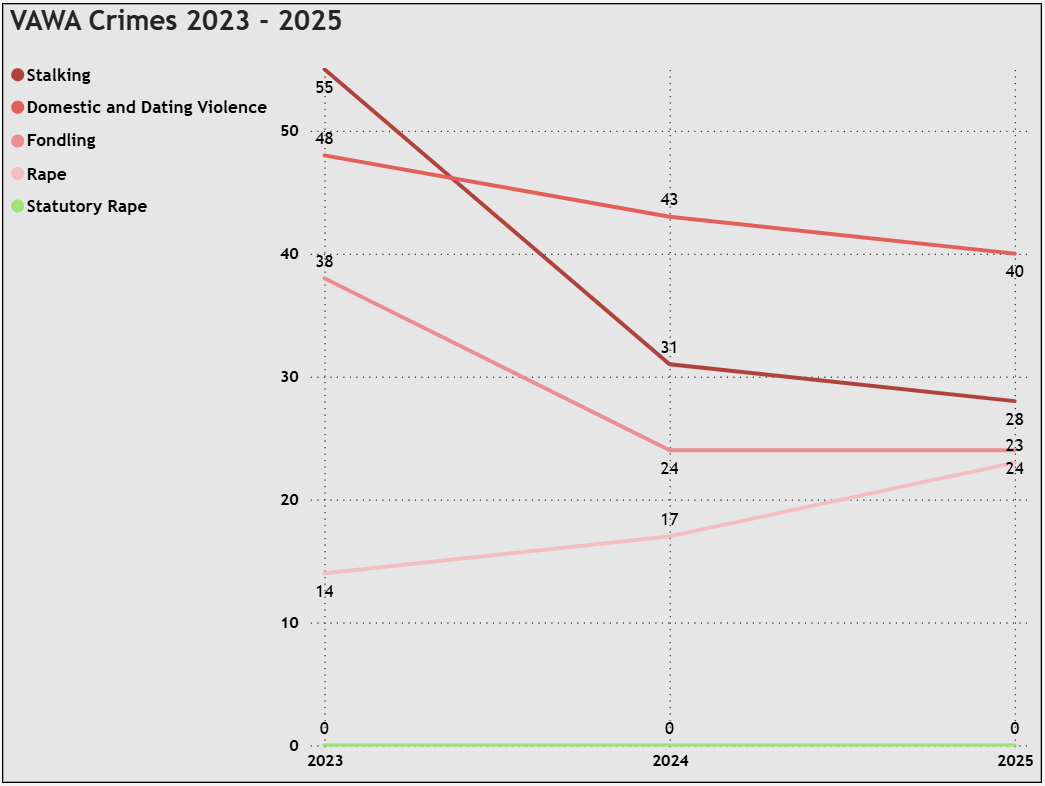
- Because VAWA crimes are notoriously underreported, it's difficult to determine whether this uptick reflects a genuine rise in incidents or simply improved reporting.
Consent Education
- Consent is an affirmative informed decision to willingly engage in mutually agreed upon sexual activity. Consent requires a clear affirmative act or statement by each participant to each sexual act in a sexual interaction. Relying solely on non-verbal communication can lead to miscommunications about one’s intent. Confusion or ambiguity may arise at any time during a sexual interaction. Therefore, it is essential that each participant makes clear his or her willingness to continue at each progression of the sexual interaction.
- Please visit theLoboRespect Advocacy Centerwebsite for more information on consent.
Bystander Intervention
- A bystander is a person who observes a conflict or unacceptable behavior. The observed behavior may be serious or minor, one-time or repeated, but the bystander knows that the behavior is harmful or likely to make a situation worse. This person may be in a position to discourage, prevent or interrupt unacceptable behavior. The bystander has two options: to remain a passive bystander or become an active bystander. A passive bystander is one who observes but does not intervene in any way.
- Please visit theLoboRespect Advocacy Centerwebsite for more information on active bystander training.
2025 Insights
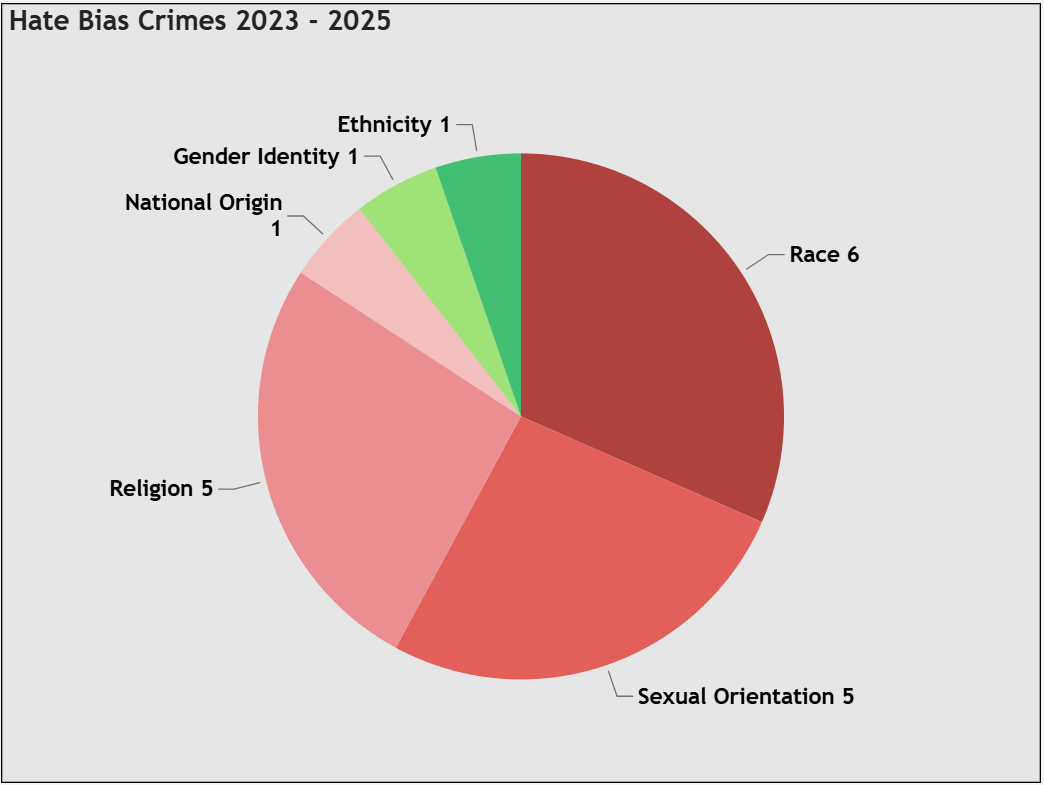
- Sexual orientation accounts for 61% of our hate and Bias related incidents over a 3 year period.
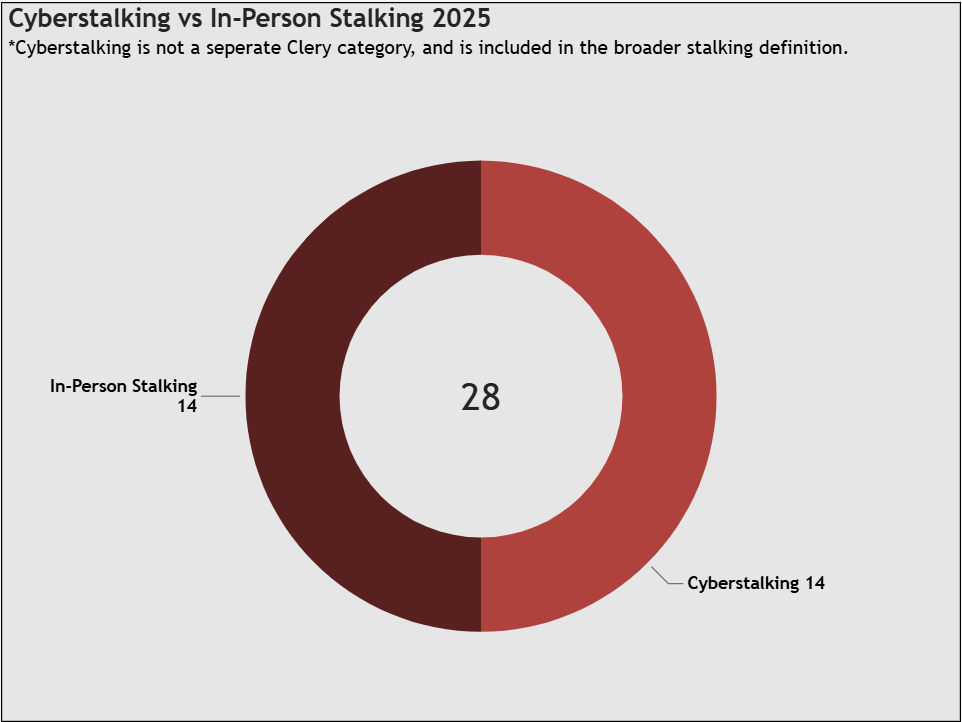
- Clery related stalking incidents have decreased by 23% since 2022.
- Fondling increased slightly since 2024.
Hate Crime Statistics
- Not every bias-related incident qualifies as a hate crime under Clery Act reporting standards.
- A hate crime is a criminal offense in which evidence shows the victim was deliberately targeted due to the perpetrator's bias. Recognized bias categories include race, religion, sexual orientation, gender, gender identity, ethnicity, national origin, and disability.
- Separately, the Anti-Discrimination Policy prohibits discrimination and harassment based on a person's Protected Category status (see the policy for full definitions). Statistics on discrimination and harassment reports filed with the Office for the Prevention of Harassment and Discrimination are available in the campus Civil Rights Annual Reports.
- Note: Civil Rights Annual Reports follow the fiscal/academic year, while Clery Act statistics are reported by calendar year — so the two data sets won't align exactly.
- Please visit UNM's hate bias website for more information: Hate Crime and Bias Incidents :: Compliance, Ethics & Equal Opportunity | The University of New Mexico